FASVIX · DOUBLE-SIDED PE FOAM TAPE
Show the
finish.
Hide the fixing.
Screw heads interrupt a clean surface. A double-sided foam bond sits behind it. Meet the white PE mounting tape with a 1 mm profile and five listed formats.
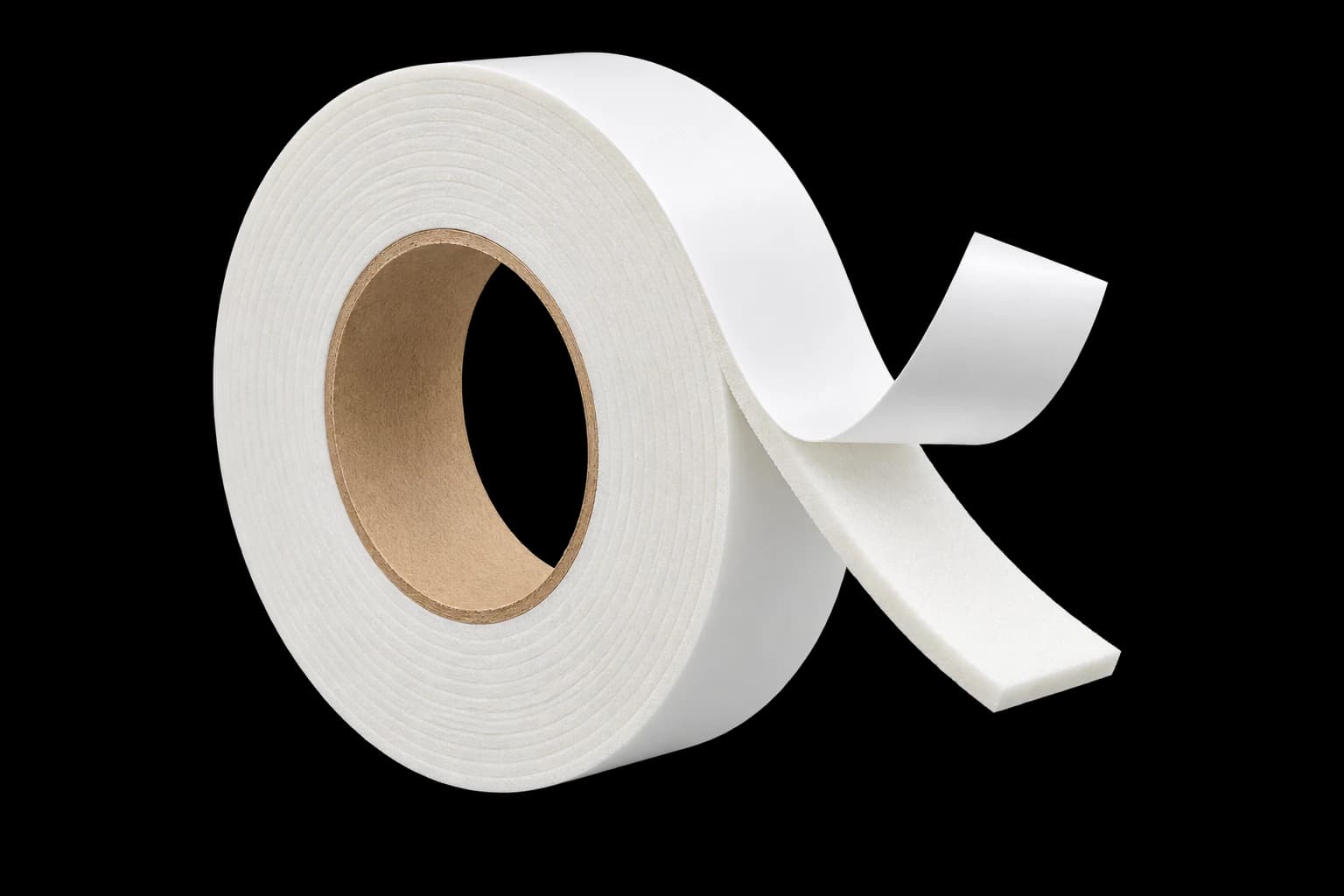
Two adhesive faces.
The fixing stays between the parts.
01THE FINISH MATTERS
You designed the face.
Keep the fixing off it.
A visible screw, a misplaced hole, an exposed glue line. Small details can undo a careful finish. A foam-tape joint puts the attachment between the parts, where it belongs.
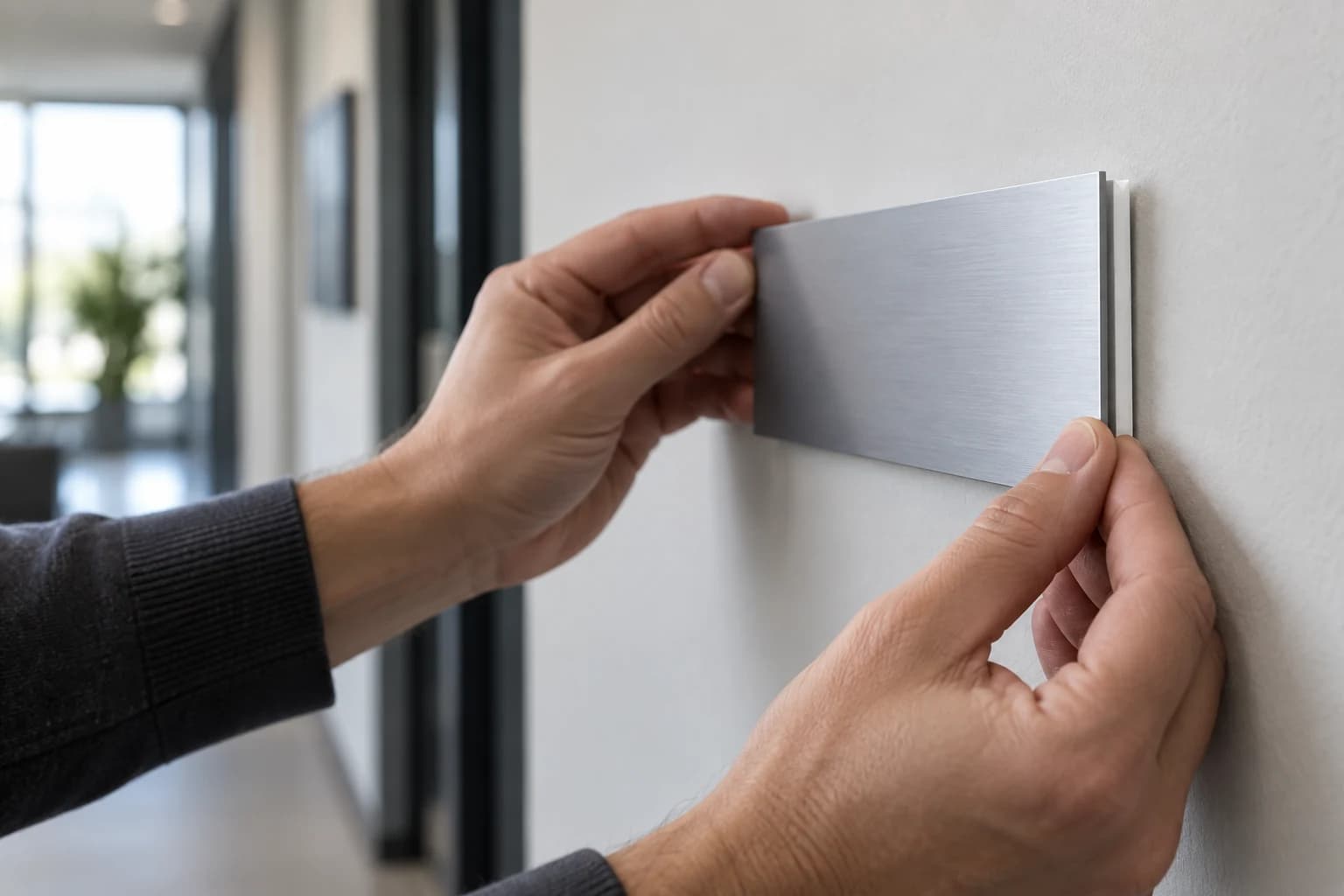
A clean face.
A hidden bond.
For suitable mounting jobs, the tape carries the adhesive on both faces. One side contacts the part. The other contacts the mounting surface. The foam sits between them.
Know the gap.
Before you bond.
Every listed article specifies 1 mm tape thickness. Account for that layer in your assembly drawing, then check the finished fit on the actual parts.
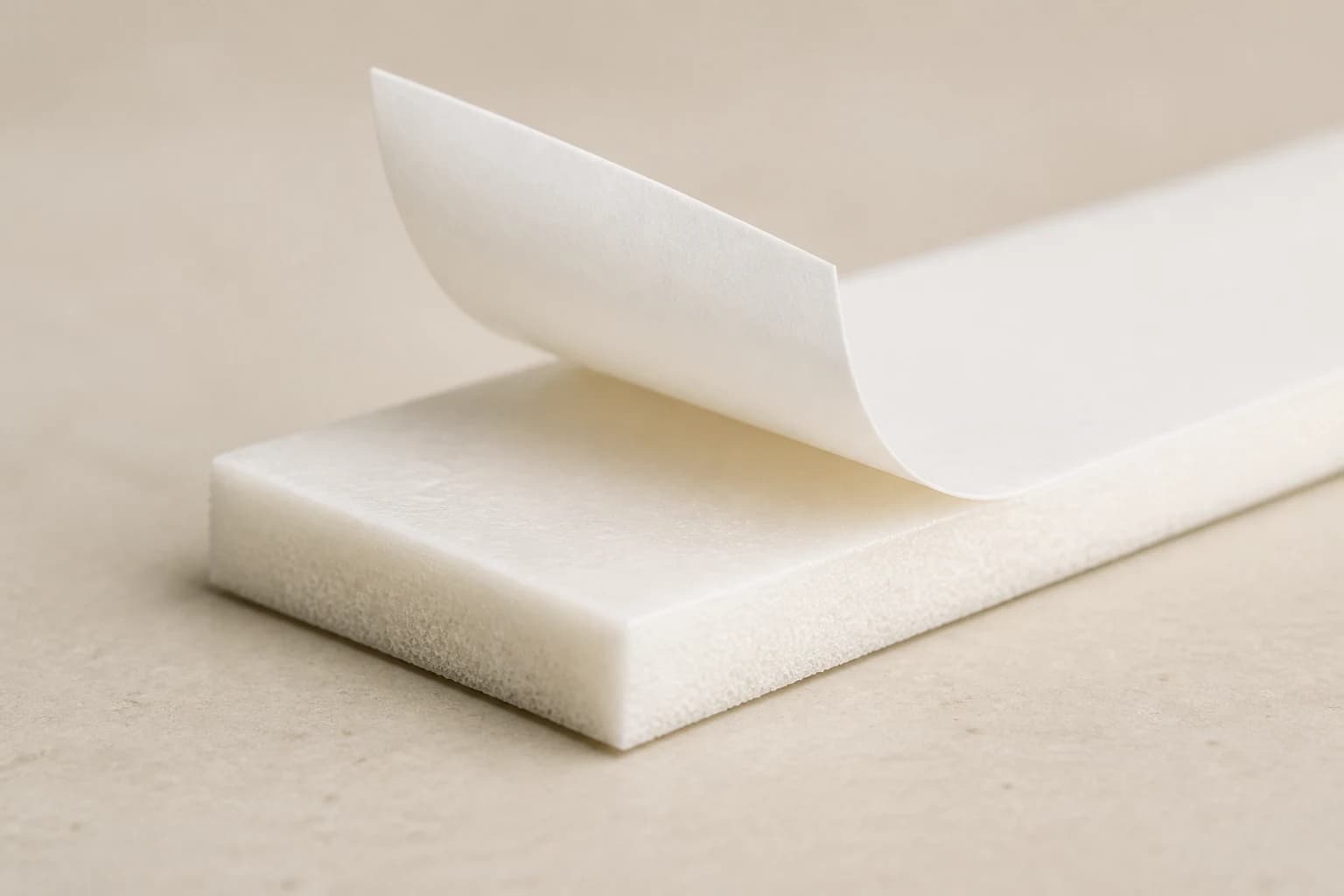
A foam layer.
Not just a film.
The PE carrier adds a compliant layer to the joint. Foam-backed tapes are used where small surface variations matter; the actual fit still needs a trial on your parts.[1]
Less guessing.
Choose an article.
Five listed width-and-length combinations, each with its own article code. Select the format you need and include it directly in your inquiry.
02WHAT IS DOING THE WORK
Two adhesive faces.
One foam carrier.
The foam and the adhesive do different jobs. Knowing the construction tells you what to check before choosing a roll.
Not a separate foam-core measurement.
Release liner
Protects the adhesive before use. Peel it away when the parts are prepared and aligned.
Adhesive face
Contacts the first surface. Select the article around its compatibility with your material.
PE foam carrier
The white polyethylene layer between the adhesive faces gives this tape its foam profile.
Second adhesive face
Contacts the other part. Both sides of the joint need sound, prepared surfaces.
Construction shown schematically. Adhesive chemistry and liner specification are article-dependent; confirm them for your application. General construction reference 3M [1].
03PUT THE MATERIAL INTO CONTEXT
Where the fixing
should disappear.
Start with the detail you want to attach. These application concepts show where a concealed foam-tape joint is worth evaluating.
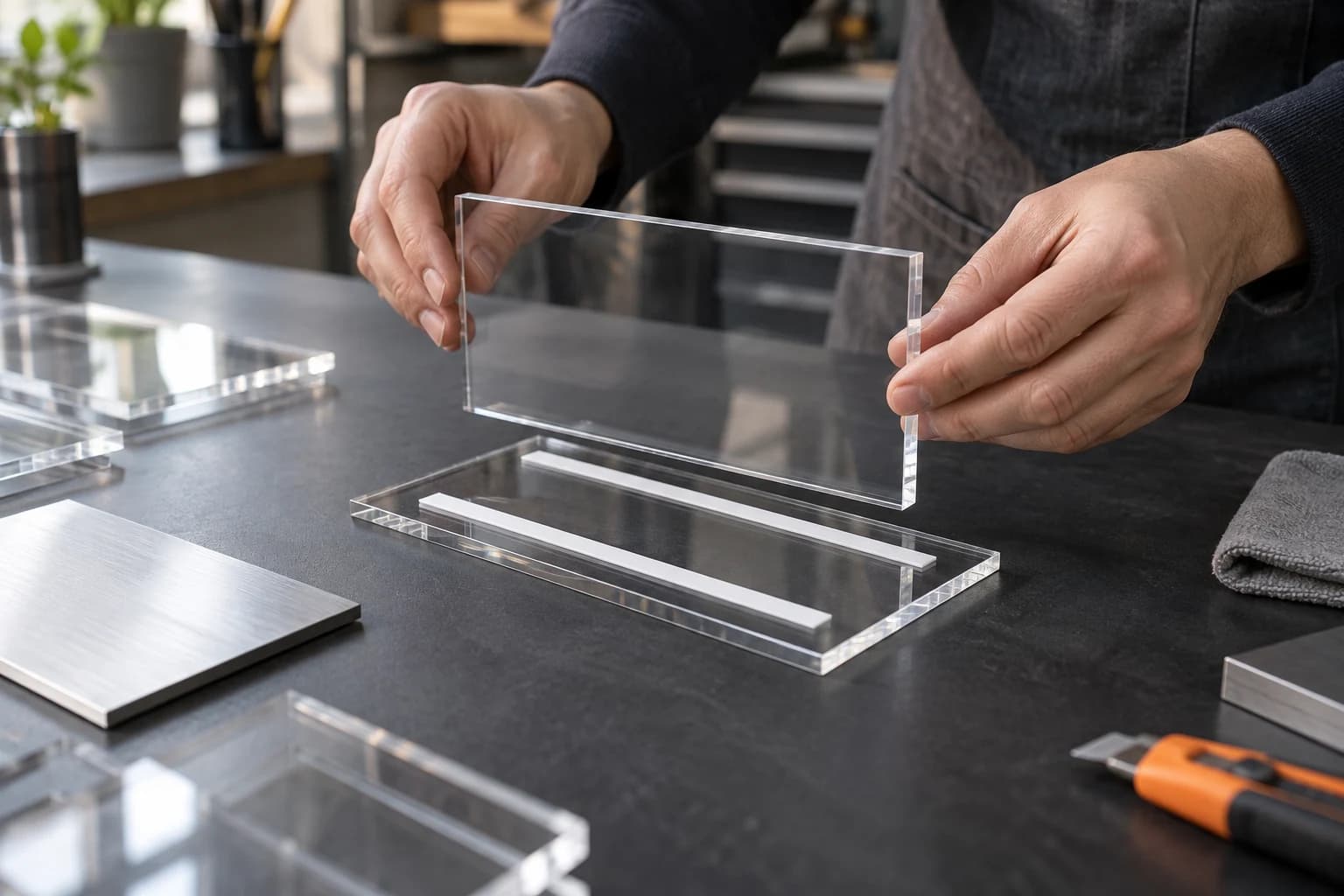
Let the display get
the attention.
Evaluate concealed attachment in point-of-sale displays and lightweight retail assemblies. Check the plastic, contact area and finished edge.
No screw head
in the message.
Consider a behind-the-face fixing for small plates and display details. Validate the surface coating and the direction of the load.
Build around
the bond line.
Plan cut lengths, contact areas and assembly order around a defined tape format. Trial the joint before committing a production batch.
Application images are visual concepts, not load tests. Confirm suitability for your surfaces, load and environment before use.
04CHOOSE THE PROCESS, TOO
Different fixing.
Different finish.
No method wins every job. Compare what changes in the assembly, then validate the performance you need.
| Consideration | PE foam tape | Through-fixing | Wet adhesive |
|---|---|---|---|
| Where it sits | Between the parts | Passes through the part | Between the parts |
| Application step | Position, peel, press | Prepare holes and fasten | Dispense and spread |
| Bond-line control | Selected tape profile | Defined by the joint | Controlled during application |
| What to verify | Surface, load and exposure | Substrate and fixing design | Surface, cure and exposure |
05THE BOND STARTS BEFORE THE PEEL
Good tape.
Bad prep.
Still a bad joint.
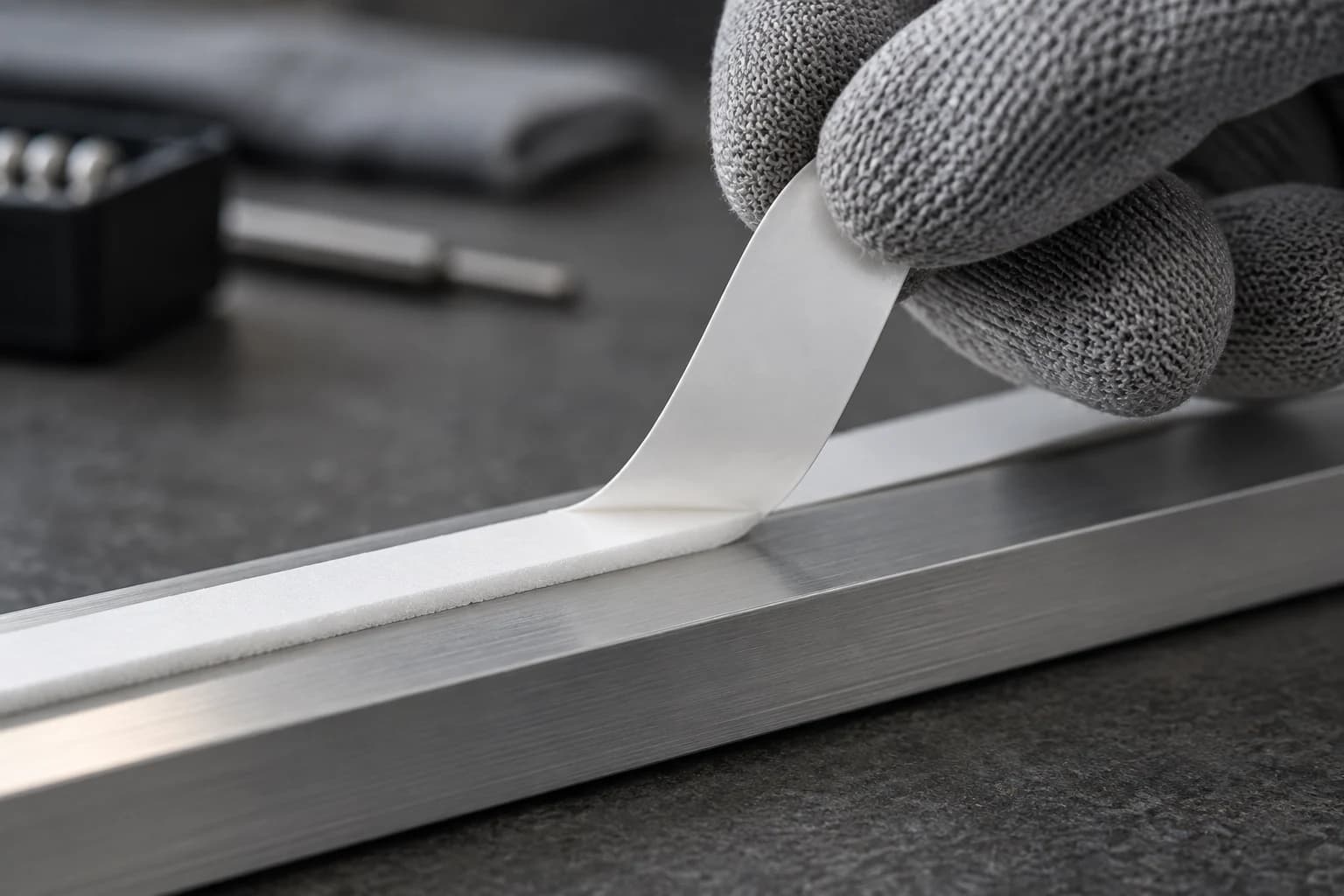
Grease, dust and loose coatings get between the adhesive and the surface. Get the preparation right before you judge the bond.
- Check the surfaces.
Identify both materials, their coatings, contact area and operating conditions. Test representative samples.
- Clean. Dry. Align.
Use a cleaning method suitable for the surface. Mark the position before exposing the second adhesive face.
- Apply. Peel. Press.
Apply the tape to the first part, remove the liner and bring the parts together with firm, even pressure.
- Validate before loading.
Follow the selected article’s application instructions. Check the actual joint under its intended conditions.
06THE NUMBERS YOU CAN SELECT
Your width.
Your roll length.
Every option below is a listed article in the FasVix catalogue. Select a format to carry its dimensions and code into your inquiry.
Dimensions are nominal catalogue values. Liner, adhesive, pack quantity and delivery details should be confirmed against the selected article.
07PRODUCT DETAILS
The specification.
Without the guesswork.
A short, usable record of what is listed. Need adhesive chemistry, temperature limits or a load assessment? Include the requirement in your inquiry.
Request technical details- Product
- Double-Sided PE Foam Tape
- Carrier
- Polyethylene foam
- Colour
- White
- Listed tape thickness
- 1 mm
- Listed roll lengths
- 10 / 25 / 50 m
- Listed widths
- 10 / 19 / 20 / 25 mm
- Sales unit
- Roll
- Liner
- White listed on the 20 mm variants;
confirm other articles
08BEFORE YOU COMMIT
The questions
worth asking.
A correct tape choice starts with a specific job. Here is what to settle before ordering.
What does PE foam actually do?
PE means polyethylene. It is the foam carrier between the two adhesive faces. The carrier provides a compliant layer in the joint; the adhesive makes contact with the surfaces. PE identifies the backing, not a guarantee that the tape will bond to every polyethylene or polypropylene object.
Which surfaces will it bond to?
Start with the exact two materials, including any paint, finish or coating. Smooth metal, plastic and painted surfaces can behave very differently. Tell us what you are joining and test the selected tape on representative samples before committing to the installation.
How much weight can I hang from it?
There is no one-size-fits-all weight figure. Contact area, the direction of the force, the surface and the environment all affect the joint. Send us those details so the application can be assessed. Do not use an unverified tape joint for overhead, structural or safety-critical mounting.
Is it suitable outdoors or in wet areas?
Outdoor and wet-area suitability must be confirmed for the selected article and application. The PE foam description alone does not establish UV resistance, a service-temperature range or a waterproof seal.
Can I remove it without damaging paint?
Clean removal is not confirmed for this product. If you need a temporary fixing or damage-free removal, say so before selecting the tape. The coating, surface condition and removal method are part of that decision.
When can I put the connection under load?
Initial tack is not the same as a fully developed bond. Follow the application instructions for your selected article and validate the joint before loading it. Ask FasVix for the recommended pressure, application temperature and waiting time for your use.
Are all five formats exactly the same construction?
All five listed formats are white and carry a 1 mm thickness specification. The 20 mm formats explicitly list a white liner. Check article-specific adhesive and liner details when changing between formats; dimensions alone do not establish identical performance.
Can I request a sample or a different size?
Use the inquiry form to request a sample, discuss another size or obtain a quotation. Include your surfaces, required dimensions and quantity. Sample availability, converting options, pricing and delivery are confirmed by FasVix in its reply.
09TELL US WHAT YOU ARE JOINING
Two surfaces.
One job.
Let’s get it right.
Send the materials, the part you want to attach and the conditions it will face. We can discuss the format, a sample request and the details needed for a quotation.
Request a quote or sample
Your selected article is included automatically.
Pricing, sample availability and delivery are confirmed individually.